

When it comes to the complicated history between the Catholic Church and the institution of slavery, the modern indictment is clear and repeated without hesitation. Modern critics claim that the Catholic Church accepted slavery as morally legitimate for centuries and only repudiated it under modern pressure. They cite Pope Nicholas V’s bulls of 1452 and 1455 as authorizing the Portuguese to reduce Africans to perpetual servitude and thereby licensed the Atlantic slave trade. They claim papal condemnations came in late, remained partial, and lacked any real force against the colonial powers of the time.
These charges do not stand up to the full record. In fact, the historical record itself is harder and more complicated than either the critics or the defenders of the Church usually admit.
The Reality of Human History
First, we must acknowledge the ugly reality of human history. Until the late nineteenth century, chattel slavery – the condition of one human being claiming ownership over another – was the norm in nearly every human society on earth, not the exception. Egyptians, Greeks, Romans, Chinese, Indians, Muslims, even African and Native American societies; they all bought, sold, and inherited people for forced labor. The idea that the institution itself should be abolished was almost unthinkable for most of human history. Slavery was simply a natural part of life.
Across the centuries, many theologians treated slavery as one of the consequences of the Fall of Man, a condition of the present age that would not endure into the Kingdom of Heaven. This position differs little from the way we see other injustices today. In spite of slavery being considered normal and justifiable throughout human history, the Catholic Church has consistently preached against the practice.

Catholic moral theology inherited the cruel reality of slavery and tried to place limits on it through the concept of “just title”. Drawing on Roman law and the scholastic tradition, a person could be considered legitimately enslaved under certain conditions: capture in a just war, condemnation for a serious crime, reduction for debt in limited cases, or birth to a slave mother. If the title was deemed legitimate, purchasing that person was widely treated as morally permissible provided the owner did not treat the slave with cruelty. The hereditary principle, handed down through traditional Roman law, was the most troubling part. A child born of a slave mother inherited the status without any personal guilt. That framework treated some human beings as property from birth. It sat in real tension with the deeper Christian claim that every person is made in the image of God.
Saint Paul worked inside the same reality. In the letter to the Ephesians he writes, “Slaves, be obedient to those who are your earthly masters, with fear and trembling, in singleness of heart, as to Christ… Masters, do the same to them, and forbear threatening, knowing that he who is both their Master and yours is in heaven, and that there is no partiality with him.” (Ephesians 6:5 and Ephesians 6:9) The letter to the Colossians carries the same instruction.
In the short letter to Philemon, Paul sends the runaway slave Ones’imus back to his master and appeals that he be received “no longer as a slave but more than a slave, as a beloved brother.” (Philemon 1:16) Paul does not order the immediate destruction of the household structure. He plants the seed of equality in Christ while regulating an institution he could not abolish by apostolic decree.
The Preeminence of Salvation
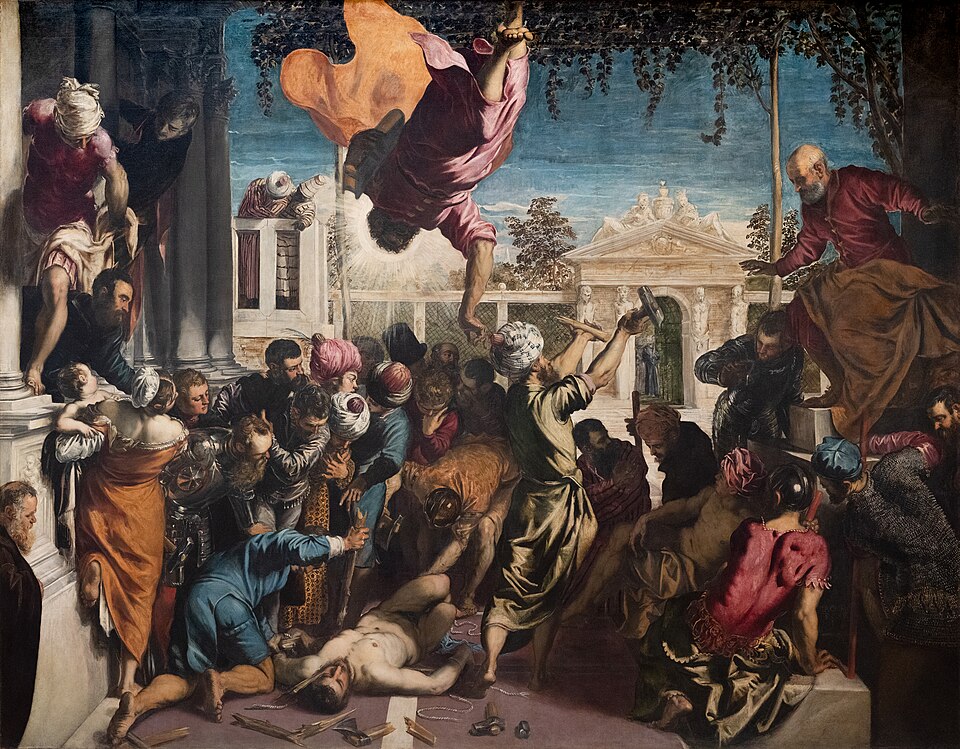
For most of Christian history the ultimate concern of the Church was the salvation of souls, not the reorganization of temporal social structures. Eternal destiny far outweighed earthly condition. The urgent pastoral task was conversion, baptism, and the avoidance of mortal sin. Manumission – the freeing of a slave – was praised as a work of mercy. Cruelty was condemned. The systematic abolition of slavery itself was not the central focus of preaching or legislation for many centuries. That priority helps explain why the full modern idea of abolition took so long to become dominant even inside the Church.
Against that heavy background, the formal teaching of the Church still moved, slowly and imperfectly, toward the rejection of the most egregious forms of human ownership.
The First Clear Strike
As early as the fourth century, Saint Gregory of Nyssa referred to the owning of slaves as an act of arrogance that challenges God. In his commentary on Ecclesiastes 2:7, around the year 380, he states, “‘I bought male and female slaves.’ What do you mean? You condemn man to slavery, when his nature is free and possesses free will, and you legislate in competition with God, overturning His law for the human species. The one made on the specific terms that he should be the owner of the earth, and appointed to government by the Creator – him you bring under the yoke of slavery, as though defying and fighting against the divine decree.” Saint Gregory’s language is absolutely clear. It leaves no room for chattel slavery.

Papal Decrees Against Slavery
When Europeans began raiding the Canary Islands, and seizing the native Guanche people, Pope Eugene IV (1431-1447) answered with Sicut Dudum on January 13, 1435. In no uncertain terms, he ordered every captive of either sex restored to full and perpetual liberty within fifteen days of the bull’s publication. In his own words, “These people are to be totally and perpetually free, and are to be let go without the exaction or reception of money. If this is not done when the fifteen days have passed, they incur the sentence of excommunication by the act itself, from which they cannot be absolved, except at the point of death, even by the Holy See,…” Much like today, the temporal (secular) rulers of the time ignored the Pope’s condemnation. However, that fact does not nullify the Church’s clear teaching against chattel slavery.
Within a generation, Pope Nicholas V (1447-1455) issued the bulls Dum Diversas (1452) and Romanus Pontifex (1455). These are both cited by modern critics as evidence of the Holy See’s endorsement of the African slave trade. In both bulls, the following statement is made, authorizing the Portuguese crown to: “invade, search out, capture, vanquish, and subdue all Saracens (Muslims) and pagans whatsoever, and other enemies of Christ wheresoever placed, […] and all movable and immovable goods whatsoever held and possessed by them and to reduce their persons to perpetual slavery,…”

At first glance, that might seem like a clear endorsement. It is all too easy for critics and modern-day historians to ignore the historical context. Constantinople, the last remnant of Eastern Christianity, was under threat of conquest by the Ottoman Turks in 1452, when the first bull was published. The great city, capital of the Eastern Roman Empire for more than 1000 years, fell on May 29, 1453, after a prolonged siege. This was a profound shock to Latin Christendom. Byzantine Emperor Constantine XI had appealed for Western help in the months before the siege, and Nicholas ordered papal ships to join a relief effort. Tragically, the ships arrived too late.
Four months after the fall of Constantinople, Nicholas V published Etsi ecclesia Christi, which called for a general crusade against the Ottomans, in hopes to curtail the Muslim invaders. Romanus Pontifex was published in 1455, two years after Constantinople had fallen. In this climate, the language of “Saracens and pagans and other enemies of Christ” carried heightened urgency. Portuguese campaigns along the North African coast and further south were viewed by Rome as a southern front in the larger struggle against Islamic expansion.
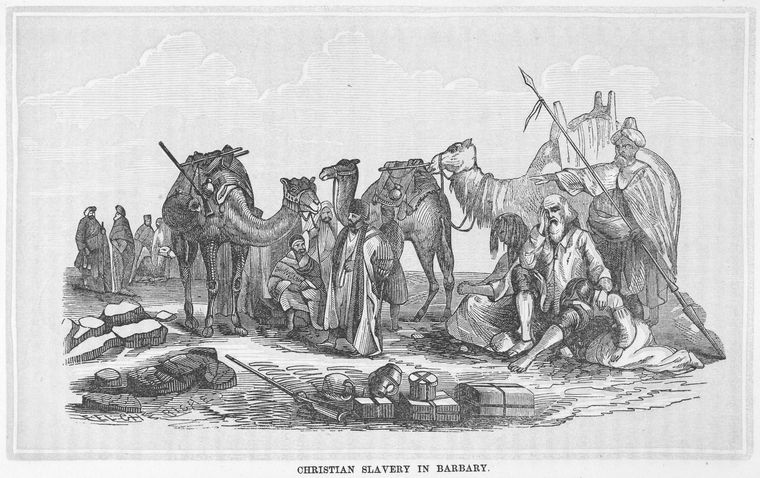
Reducing defeated non-Christian enemies to perpetual servitude was standard treatment for prisoners of war at the time, and belonged to the traditional just-war categories long applied in crusading contexts. That is a far cry from simply endorsing the African slave trade for the sake of greed and profit.
After the discovery of the Americas, Pope Paul III (1534-1549) went further to decry the practice of slavery. After hearing reports of mistreatment of native peoples by Spanish and Portuguese colonizers, he published Sublimis Deus in June of 1537. In it, he declared that “the Indians are truly men” capable of receiving the faith. In his own words, “the said Indians and all other people who may later be discovered by Christians, are by no means to be deprived of their liberty or the possession of their property, even though they may be outside the faith of Jesus Christ; and that they may and should, freely and legitimately, enjoy their liberty and the possession of their property, nor should they be in any way enslaved; should the contrary happen, it shall be null and have no effect.” The enemy of the human race, he wrote, had invented the claim that these people were dumb brutes created for service. Paul III rejected the claim outright. Again, the colonial powers resisted. After the sack of Rome in 1527, papal influence in Spain and Portugal was severely limited. The Church could issue the order, but it could not field the armies that would enforce it.
A century later, Pope Urban VIII (1623-1644) issued Commissum Nobis, at Jesuit request in 1639, which imposed excommunication on anyone who reduced the Indians of Paraguay, Brazil, and the Rio de la Plata (modern-day Argentina and Uruguay) to slavery.

In 1741, Pope Benedict XIV (1740-1758) issued an apostolic letter renewing and confirming the Church’s long-standing teaching against the unjust enslavement of the Indians. In Immensa Pastorum Principis he states: “although the Apostolic See had done much, and for a long time, to relieve their afflicted fortunes, there were even then men of the orthodox faith who, as if they had utterly forgotten all sense of the charity poured forth in our hearts by the Holy Spirit, presumed to reduce the wretched Indians, without the light of the faith, and even those who had been washed in the laver of regeneration, to servitude, or to sell them as slaves to others, or to deprive them of their property, and to treat them with such inhumanity that they were thus greatly hindered from embracing the Christian faith, and most strongly moved to regard it with abhorrence.”
After reiterating that this behavior is “very strictly forbidden,” under penalty of automatic excommunication (latae sententiae), he extends this strongest of Church punishments “to all those who dare give counsel, aid, favor or cooperation under any pretext or color whatsoever to those who commit these acts, or who permit themselves to preach that the thing is lawful, or to teach it, or to cooperate in any other way in these misdeeds.”
In 1839, Gregory XVI (1831-1846) finally named the African slave trade directly in In Supremo Apostolatus. He called it “the inhuman slave trade in Negroes” and forbade the faithful to reduce anyone to servitude or to support that traffic. He listed the earlier papal bulls as the foundation on which he built his message.
These interventions were directed at the new forms of chattel slavery that arose with European expansion. They were issued while temporal crowns controlled the colonies and held the military power. They could declare the sentence of excommunication, the worst punishment the Church could deliver. What the papacy could not do is compel obedience from kings and governors who found the trade profitable. Unfortunately, enforcement of Church doctrine failed far more often than it succeeded.
Catholic practice also failed. Some members of religious orders owned and sold slaves. The Maryland Jesuits held plantations and were recorded selling 272 men, women, and children in 1838. Other clergy around the Americas did the same.

Those acts contradicted the teaching already set down, and in many cases incurred the penalty of automatic excommunication (latae sententiae), even though many of these clergy were never formally informed of this punishment. These immoral acts by clergy were betrayals of Church doctrine, not its application.
Different Codes, Different Results
Wherever slavery continued, Catholic law tried to limit the damage. Spanish codes gave slaves the right to own property, to petition courts, to marry, and in many places to buy their own freedom. It also forbade masters from making them work on the approximately ninety Sundays and other feast days of the Catholic calendar. Religious instruction was required, and manumission was treated as a good work. Dutch and English codes were colder. They treated the slave as purely property and offered fewer paths out. The difference shows in the numbers.
In 1830, the free Black population of New Orleans – a former French colonial city – stood at more than forty percent. In Charleston, it was under seven percent. Neighboring Protestant cities in the Deep South recorded even lower figures. Culture and law shaped outcomes. Catholic teaching, even when imperfectly applied, still left a measurable mark.

In Catholic colonies, slaves were not only encouraged to participate in the sacraments, they were usually allowed to practice many aspects of their native cultures. Conversely, slaves in Protestant colonies were often denied access to Christian services and were even forbidden from playing drums. This is evident in the different music traditions between former Catholic colonies, where African rhythms and dance are central to popular music, and former Protestant colonies, where hand clapping and choral singing were often the only musical options left for slave populations. Additionally, the well-known American slave tradition of “jumping the broom” would have never been necessary had these unfortunate people been allowed to perform marriage ceremonies in Protestant churches.
Unlike certain Protestant denominations, who invoked the “Curse of Ham” from Genesis, the Catholic Church never produced a systematic racial theology that treated Black or Indian people as permanently inferior by nature.
Men Who Acted
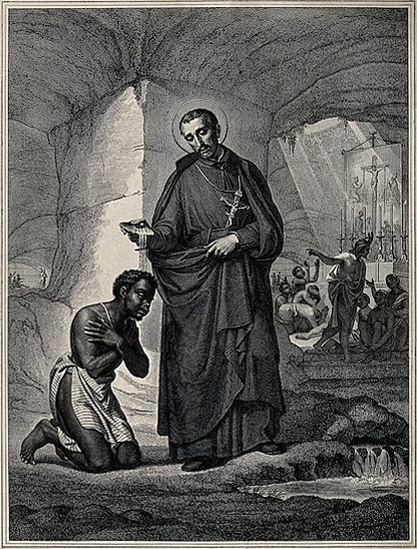
Unfortunately, words alone do not change a port or a plantation on the other side of the world. In Cartagena, the main entry point for African slaves into Spanish America, The Jesuit Alonso de Sandoval spent decades documenting the horror of the ships and the slave pens. His 1627 book De instauranda Aethiopum salute described the conditions, criticized negligent masters and priests, and insisted Africans were fully human and capable of the faith. His younger protégé, Saint Pedro Claver spent decades among the Africans arriving in Cartagena. For forty years, he boarded every arriving ship, brought food and medicine into the holds, learned African languages through interpreters, and baptized tens of thousands. He slept in the same quarters as the men he served, and called himself “the slave of the slaves forever”
Farther south, the Jesuits built something rarer still. Beginning in 1609, they gathered Guarani communities into about thirty reductions across what is now Paraguay, Argentina, and southern Brazil. These were not slave camps. They were ordered towns with workshops, farms, schools, and self-government under Jesuit direction. The Indians were protected from the Portuguese and Spanish slave-raiders who would have otherwise carried them off. The reductions produced music, crafts, and a working Christian society. Temporal authorities eventually decided the experiment threatened their profits. In the 1750s and 1760s, Spanish and Portuguese troops, acting under royal orders in direct violation of Urban VIII’s Commissum Nobis, forced the Jesuits out and razed the settlements. The Jesuits were expelled from their territories, leaving the Guarani exposed. As usual the temporal powers got what they wanted despite protests from the Church.
Conclusion
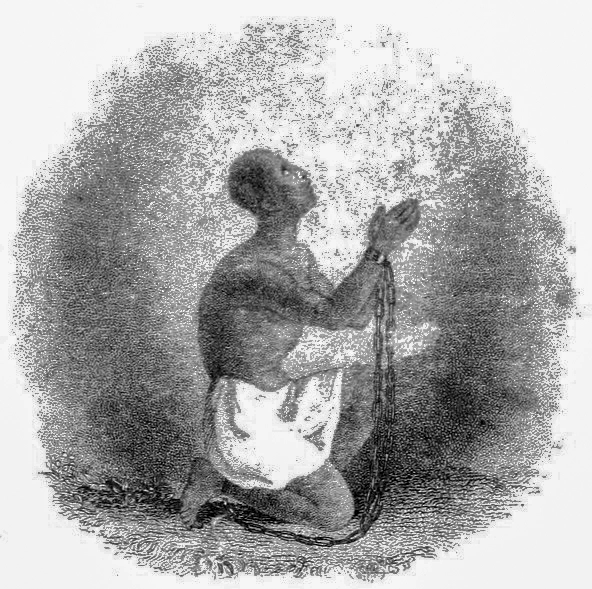
The idea of abolishing the institution of slavery took centuries to take root because the institution itself had been the ordinary condition of humanity for so long. Saint Paul’s letters show the weight of that reality. The “just title” categories show how the older legal inheritance continued to operate. The priority of eternal salvation shows why earthly emancipation was not always the first pastoral concern. The papal bulls show the related attempt to apply the deeper principle of the image of God against the most egregious new forms of enslavement.
None of this erases the scandals. Some Jesuits in Maryland held slaves, and other clergy did the same or worse. In 1488, Innocent VIII accepted a gift of Moorish captives, who were paraded through the city and later baptized. Individual Catholics failed the teaching of their own Church. This is no different than self-proclaimed Catholics supporting abortion rights or unjust wars today.
While these failures are real and shameful, they do not rewrite official Church teaching on matters of morality. When clergy owned slaves, they acted against the repeated judgements of the Holy See, not as its instruments. The same distinction applies to the kings and colonial governors who suppressed papal bulls and drove the Jesuits from the reductions. Temporal power, as always, answered to profit and force. The Church answered, however unevenly, to a much higher standard.
The modern claim that the Catholic Church “accepted” or “sanctified” slavery until the nineteenth century collapses under the weight of evidence. From Saint Gregory of Nyssa to Pope Eugene IV to Pope Paul III, the consistent voice was that a human being made in the image of God cannot be reduced to a possession. The world around them ran on the opposite principle. The Church kept saying the opposite principle was a lie and a betrayal of Jesus’ teachings.
The same clarity is still required. The forms of dehumanization change. The demand for Catholics who will speak plain truth and refuse to bow does not.